
Hiking socks and ankle socks


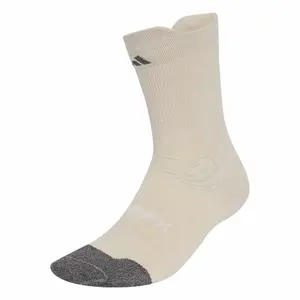
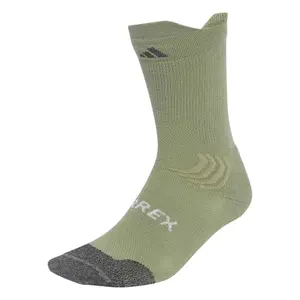


B blister are almost always caused by ill-fitting socks: creases, moisture, badly placed seam. This page offers socks and ankle socks for women's walking, from light strolls to mountain hikes.
Start with the height compatible with your shoe, then the thickness.
Fitted and crease-free
A sock that's too big creases, and one that's too small it slips down. It should hug your foot without being tight, with a well-placed heel. Try it on with the shoes you'll be wearing for walking.
Thickness: thin, medium or reinforced
The thin sock is suitable for warmth and fitted shoes, the medium for most outings, and the reinforced for long hikes and hard ground. The thicker areas at the heel and under the forefoot cushion impacts.
Choose height according to the shoe
With a low shoe, a no-show sock is sufficient. With a mid-top shoe, a high sock prevents the shaft from rubbing against the skin. The height doesn't affect the walking quality: it only protects the area where contact causes irritation.
Who offers what
On this page, you'll find Lorpen, La Sportiva, G-Heat, Helly Hansen, and Erima. Depending on the models, they cater to walking, mountain activities, or training: read the description before making a choice.
What to wear them with
Pair them with a legging or tight in cool weather, or with a short in summer. A spare pair fits in your bag, and the accessories complete the outfit.
Budget-friendly socks
The discounted pairs are on women's clothing deals, and the clearance items are on clearance women's clothing.
Fabrics: merino, synthetic, blend
Natural fibers like merino wool keep a pleasant warmth and hold less odour. Synthetic fibers dry quickly and are wear-resistant. Many models mix the two to combine comfort and support. For multi-day hikes, a blended pair washes and dries quickly in the evening.
Taking care of your feet
Cut your nails short before a long outing and dry well between your toes. A protective cream on sensitive areas limits friction. During breaks, remove shoes and socks to let your skin breathe: ten minutes is enough to release moisture.
Walking over multiple days
On a hiking trip, bring two pairs and wash them in the evening: a clean, dry pair in the morning is better than a new pair that's still damp. Fix the one drying outside of your bag with a clip. Avoid trying unfamiliar socks on the day of departure: test them on a short outing to identify seams that might rub. Your foot swells during exertion, so try them on later in the day. Keep a clean pair for the night, as dry feet recover much better.
Frequently asked questions
How to avoid blisters while hiking?
A crease-free sock, dry feet, and well-laced shoes. Change pairs during breaks if it is wet.
Do you need two pairs on top of each other?
Not necessarily. One well-fitting pair is sufficient; layering adds bulk inside the shoe.
How to wash hiking socks?
Inside out, at low temperature, without fabric softener, which clogs the fibers.
Sock or no-show sock for walking?
The no-show sock goes well with low shoes. For a mid-top shoe, the sock provides better protection around the ankle.
When to change socks?
As soon as the heel thickness compresses or a hole appears: cushioning is lost.





